Charlestown Harbour’s new lock gate is finally complete, concluding a complex project to protect the harbour after winter storms damaged the previous gate beyond repair.
Charlestown Harbour is a Grade II-listed UNESCO World Heritage Site in Cornwall, comprising an inner and outer harbour separated by a flap lock gate. The gate failed in October 2024, draining the inner harbour and posing a safety risk to its users.
After co-ordinating the emergency response – involving transporting historic vessels to safety and installing a temporary barrier – Beckett Rankine was commissioned to design and project manage the installation of a new lock gate.
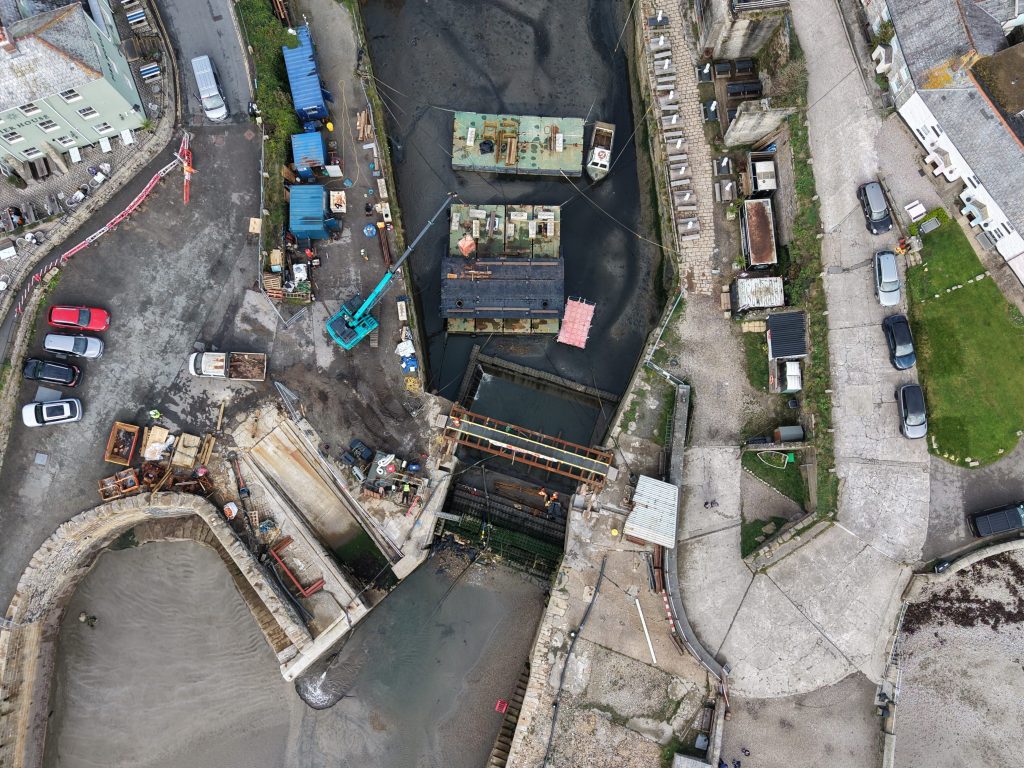
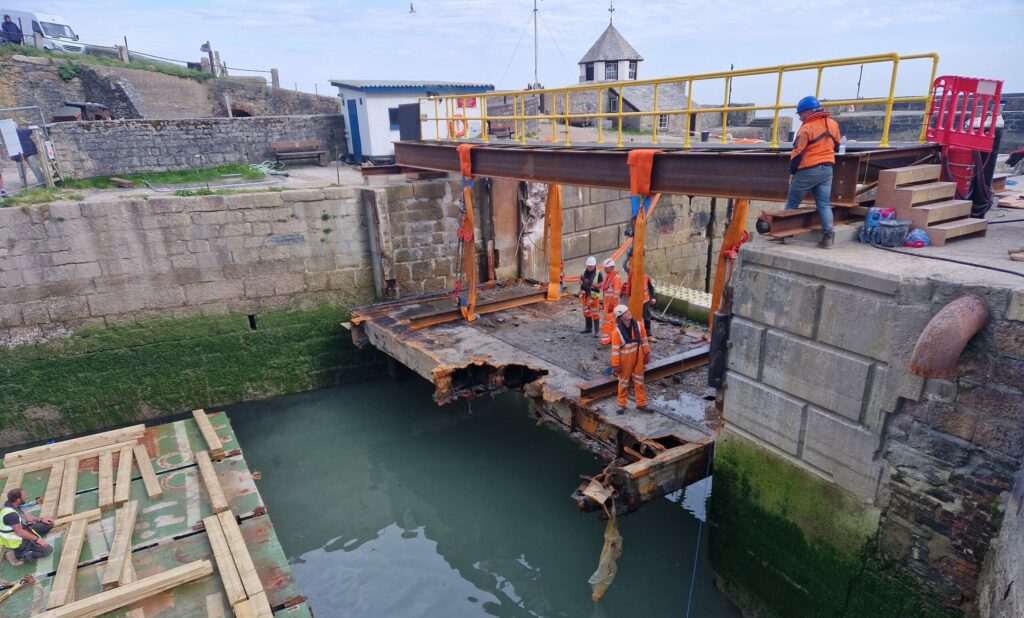
The project team, led by appointed contractors ConstructEx, manually lifted and removed the old gate in April 2025. Over 100 tonnes of mud were removed from the site, and concrete repairs were carried out to the harbour walls that contained deteriorating mundic concrete, a rare aggregate material almost unique to the region.
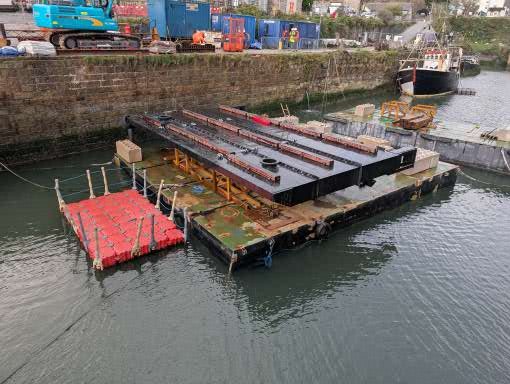
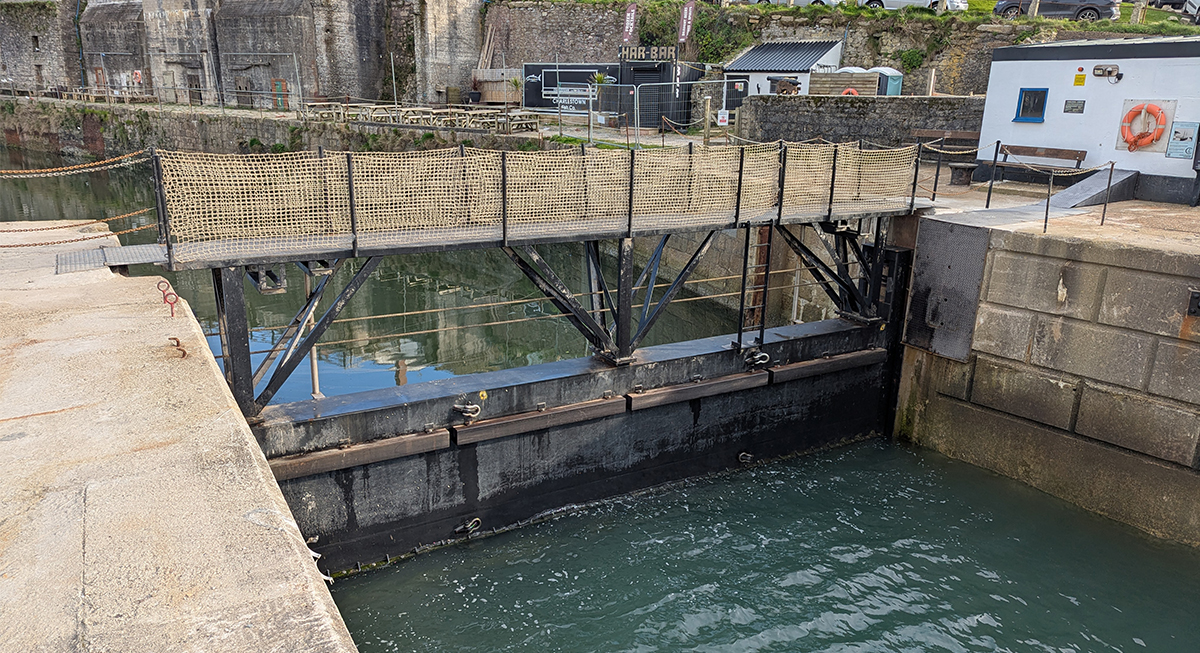
The replacement gate was assembled onsite in autumn and lifted into position in December, with the walkway installed the following month.
The final major milestone has now been achieved with the installation of the winches, sheaves and safety features.
Charlestown Harbour will mark its official re-opening with a commemorative public event this Saturday, 4th April, inviting residents and visitors to celebrate the harbour’s restoration to its former glory.
Bridging modern and historic engineering
At first glance, the new gate appears almost identical to its predecessor. It updates and reinforces the original design, keeping the character of its surrounding heritage while meeting modern safety standards so that it can protect the harbour for another 50 years.
A modular design, a Stillwell system for the inner tanks, and the reintroduction of sluice gates will make future maintenance easier, more sustainable and cost-effective. New lighting, barriers and safety netting on the walkway improve visitor safety, while hard-wearing timbers will protect the gate face as boats pass over it.
Importantly, the gate is also designed to improve the harbour’s climate resilience. This is achieved with 200kg storm locks, inner flood tanks that can withstand greater wave impacts, and an intentional void between the gate top and walkway to allow wave overtopping at high tide.
The successful balance of old and new is especially impressive given that very few accurate records were available from the harbour’s original construction, or about the previous gate’s design. The project also had to leave minimal traces of the work taking place due to Charlestown Harbour’s protected heritage status.
The project has also had to navigate adverse winter weather that slowed construction progress, which could only take place during the narrow window of twice-monthly Spring tides.
James Smith, Director and project lead, reflects on the project:
“Charlestown Harbour’s lock gate is key to keeping one of Britain’s last working Georgian ports safe and operational for its community and visitors. That’s why it was so important for our design to account for increasing climate change pressures, without compromising the historic fabric of the harbour.
It’s incredibly fulfilling to see the final lock gate in place and working, especially after the challenges of installing during winter. Beckett Rankine is grateful to Charlestown Harbour for the opportunity to work on this unique site and would also like to thank ConstructEx for their commitment and professionalism throughout.”
The work has been completed as part of a regeneration project part-funded by the Government’s Shared Prosperity Fund, awarded via the Cornwall and Isles of Scilly Good Growth Programme.