
M Jennings, J Monasta, T Beckett, Beckett Rankine UK.
Presented on 30th October 2025 at the Institute of Marine Engineering, Science & Technology’s Maritime Industry Decarbonisation Symposium in Glasgow. Download the paper here
ABSTRACT
Orbit Clipper is London’s first fully electric CO-PAX ferry, launched in 2025 to operate a cross-river, zero-emission service between Rotherhithe and Canary Wharf, London. Beckett Rankine first proposed the scheme in 2017 as an alternative to a bridge – offering significant savings in cost, material and embodied carbon. Working in consortium with Thames Clippers and Wight Shipyard, under Innovate UK funding, Beckett Rankine has designed and overseen the construction of two floating piers with associated infrastructure to support the zero-emission service. This paper addresses the challenges and lessons learnt in delivering infrastructure for the ferry, aiming to promote knowledge sharing and support future implementation of similar zero-emission schemes. Key discussion points include:
- Gaining requisite funding to support innovation and experience working under UK SHORE funding.
- Challenges in obtaining approvals for planning and statutory licences.
- Managing the design and development of the ship-to-shore interface for an electric vessel.
- Delivering electric charging at the berth, and how this can be effectively sourced and implemented.
1. INTRODUCTION
The UK maritime sector is at a critical juncture as it embraces the ambitious strategy established by Maritime 2050 (DfT, 2019). With a key component of ‘taking action on clean maritime growth’, the subsequent Clean Maritime Plan established a vision for transitioning to a net-zero sector (DfT, 2019), in line with the UK’s 2050 net-zero target and International Maritime Organization (IMO) Strategy on the reduction of greenhouse gas emissions. In 2019, the Clean Maritime Plan stated (DfT, 2019):
By 2025 we expect that all vessels operating in UK waters are maximising the use of energy efficiency options. All new vessels being ordered for use in UK waters are being designed with zero emission propulsion capability. Zero emission commercial vessels are in operation in UK water.
As of 2025, there is extensive literature covering the progress and potential for maritime decarbonisation from a range of academic, public and private sources (Baresic, 2024). The UK government has produced a series of policies establishing strategies and pathways, including the most recent Maritime Decarbonisation Strategy (DfT, 2025). Much of this literature explores alternative fuels, such as hydrogen and ammonia, or hybrid vessels – noting that whilst fully electric vessels offer zero-emissions potential, there are practical limitations due to battery and charging requirements.
Outside the UK, electric ferries are already in operation, albeit typically smaller (average 22.5m long), slower (average 9 knots) and with reduced capacity (average 100 persons) in comparison to similar vessels operating on a hybrid or alternative fuel system (84.5m long, 15 knots, 360 persons) (Anwar, 2020). This is most evidenced in Norway, where over 80 electric ferries are now operating since the launch of the pioneering Ampere in 2015 (Business Norway, 2025). Such schemes demonstrate that a zero-emissions, fully electric vessel has significant potential when operating on short and predictable routes, with additional advantages realised in operational safety and ease of implementing bunkering infrastructure (DfT, 2022). As such, electrification schemes are identified as having the potential to be a leading aspect of decarbonisation within the wider maritime sector (Arup, 2023).
In the UK, vessel electrification remains mostly focused on hybrid diesel-electric ferries such as those operating in the Scottish Isles (CalMac, CMAL), the Solent (Wightlink) and the River Thames (Thames Clippers). Uptake of fully electric ferries remains comparatively limited to low-capacity demonstration projects such as the e-Voyager and Artemis EF-12 Workboat XL operated by Plymouth Boat Trips (Johnson, 2022) and Orkney Ferries (Artemis Technologies, 2025) respectively.
Against this background, the launch of the Orbit Clipper in 2025 as a zero-emission, fully electric ferry service, with a 150-passenger capacity, can be considered an industry-leading scheme within the UK maritime sector. The Orbit Clipper is the UK’s first fully electric passenger and cycle ferry, operating a cross-river service between Rotherhithe and Canary Wharf, London. Beckett Rankine (BRL) maritime engineering consultancy has planned, designed and overseen the construction of pier infrastructure to support the Orbit Clipper. This scheme was achieved with the assistance of funding from the Clean Maritime Demonstration Competition (CMDC) Round 3 – an initiative launched under Innovate UK (IUK) that is now managed by the UK Shipping Office for Reducing Emissions (UK SHORE).
This paper seeks to address some of the challenges and lessons learnt in delivering this highly innovative scheme. This paper is presented from BRL’s maritime engineers’ perspective, focusing on delivery of infrastructure within a ‘real-world’ setting. The intent of this paper is to promote collaboration and knowledge sharing within the maritime sector, and aims to support future implementation of similar zero-emission schemes. The following sections explain the timeline of the scheme from initial conception in 2017 through to delivery in 2025, setting the scene for knowledge sharing of key lessons learnt.
2. A Brief Timeline of the Rotherhithe – Canary Wharf River Crossing
There has been a pedestrian ferry at Rotherhithe since the Doubletree Hilton hotel opened in 1991. Operated by Thames Clippers (TC), the service ran from an end-of-life Rotherhithe Pier using a re-purposed diesel ferry. This operation was unsuitable for cyclists, with access to the pier passing through the hotel’s reception and steep gradients along the access brow during low tides. In 2006, Sustrans, the charity that promotes cycling routes, proposed a pedestrian and cycle bridge to improve connectivity between Rotherhithe and Canary Wharf (Sustrans, 2006). Appointed by Transport for London (TfL) in 2018, Atkins undertook a feasibility study of fixed crossings, identifying a lifting bridge as the preferred solution at a cost of circa £115-200m (McIntyre, 2018).
Atkins developed this bridge design further, carrying out ground investigations and navigational studies. The location next to a bend in the river is navigationally difficult, and thus the opening span of the proposed bridge became longer until it was one of the longest lifting pedestrian bridges in the world. With this, the estimated cost of the bridge progressively increased (London Assembly Transport Committee, 2019).
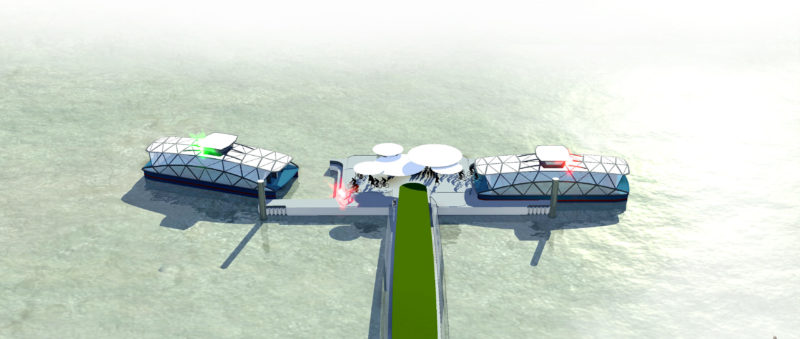
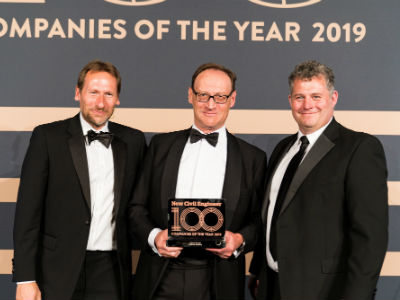
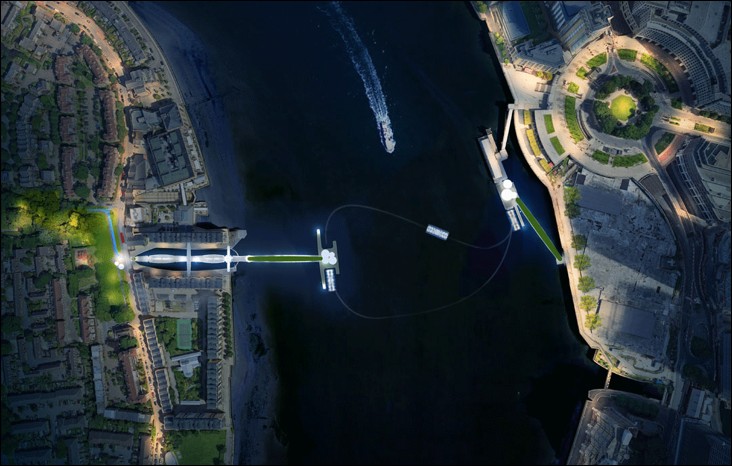
Observing this rise in estimated cost of the bridge, TC and BRL jointly concluded that an enhanced all-electric passenger and cycle on-cycle off (CO-PAX) ferry would be a significantly cheaper solution, which could be delivered more quickly whilst meeting the forecast bridge capacity with 2-3 vessels deployed. We together developed and published a proposal for the vessels and piers, winning the 2019 NCE Impact in Transport Award for yet-to-be-built projects (Beckett Rankine, 2019). A schematic of this proposal is illustrated in Figure 2.1.
By July 2019, TfL had spent ~£13m on the pedestrian bridge project and the bridge’s estimated cost had risen to over £600m (Horgan, 2019). TfL halted the bridge scheme and started to look at the enhanced ferry options instead. In 2020, the Covid pandemic struck and seriously impacted TfL’s finances, halting all work on the Rotherhithe crossing.
In 2021, the first round of CMDC presented an opportunity for TC, BRL and ship builder Wight Shipyard (WSY) to secure funding for developing the electric CO-PAX ferry proposal into a full feasibility study. This study concluded that not only was the scheme viable, but it could pioneer the growth of electric ferries within the UK. With Aqua superPower (ASP) joining the consortium, subsequent funding under CMDC Round 3 was secured in 2023 for full delivery of the ferry scheme.
3. Delivering the Zero-Emission Ferry Service
With the consortium established and funding secured, the team (TC, BRL, WSY, ASP) had 2 years to design, plan and construct the electric ferry and supporting pier infrastructure. Starting in April 2023, the CMDC requirements stipulated completion by 31st March 2025 for a successful demonstration of the scheme. To inform early-stage optioneering and concept development, three key strategic design aims were established for the pier infrastructure:
- Provide a fast river crossing.
- Deliver electric charging at the berth.
- Offer a fully accessible river crossing for cyclists, pedestrians and wheelchair users.
A fast river crossing was deemed essential to encourage uptake and usage of the scheme, with a target of ~150 crossings per day, each 250m long and sub-2 minute. To support this, BRL focused on delivering a rapid berthing system which could achieve a 2-minute turnaround time. This was a key driver behind inclusion of an auto-mooring system. To deliver electric charging for the zero-emission service, a connection to the nearby national grid at Canary Wharf was identified as the preferred solution. A cable route was devised passing across the adjacent landside, down the access brows and through the pontoon structure to a plug-in charging point adjacent to the berth.
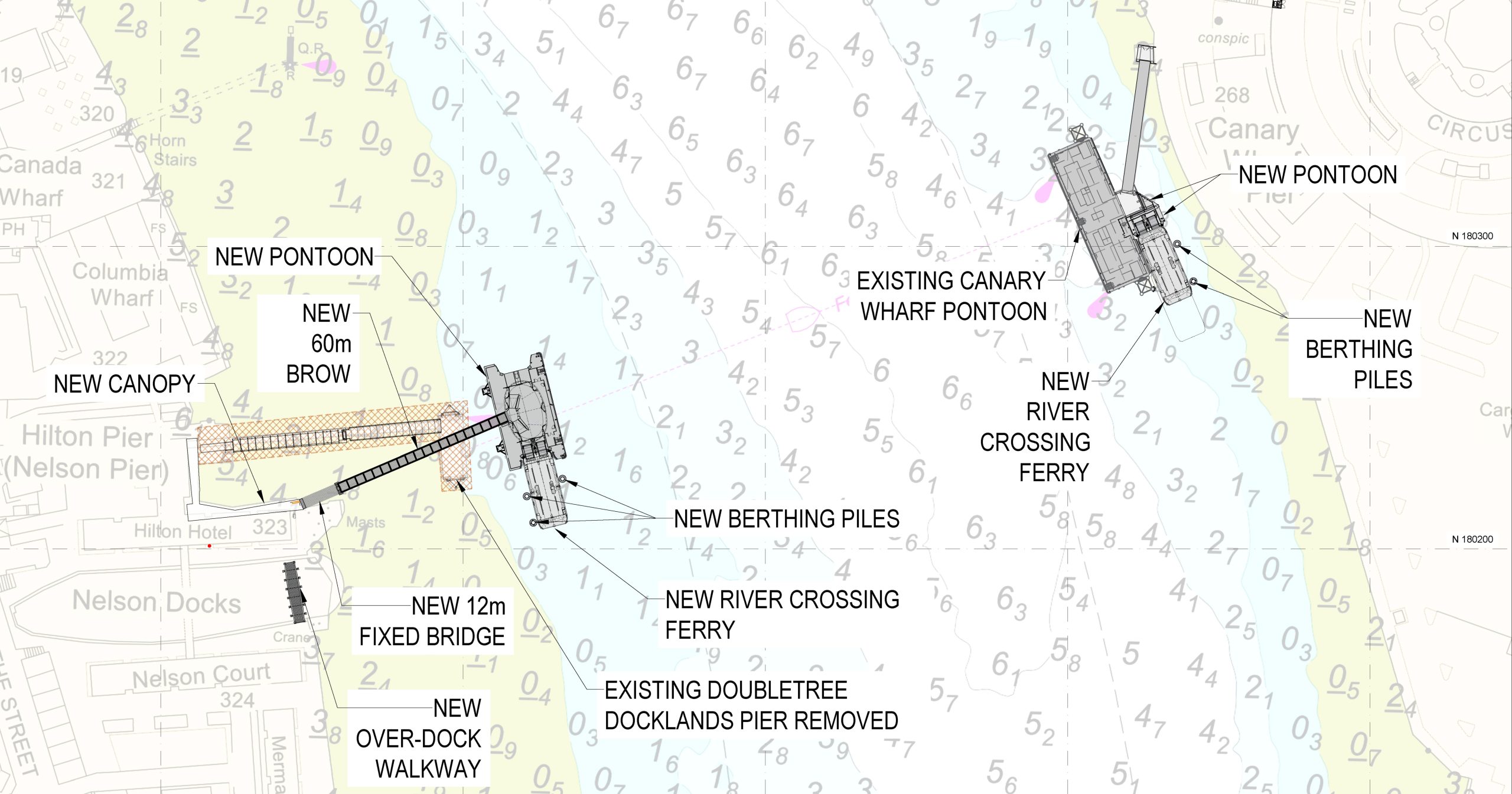
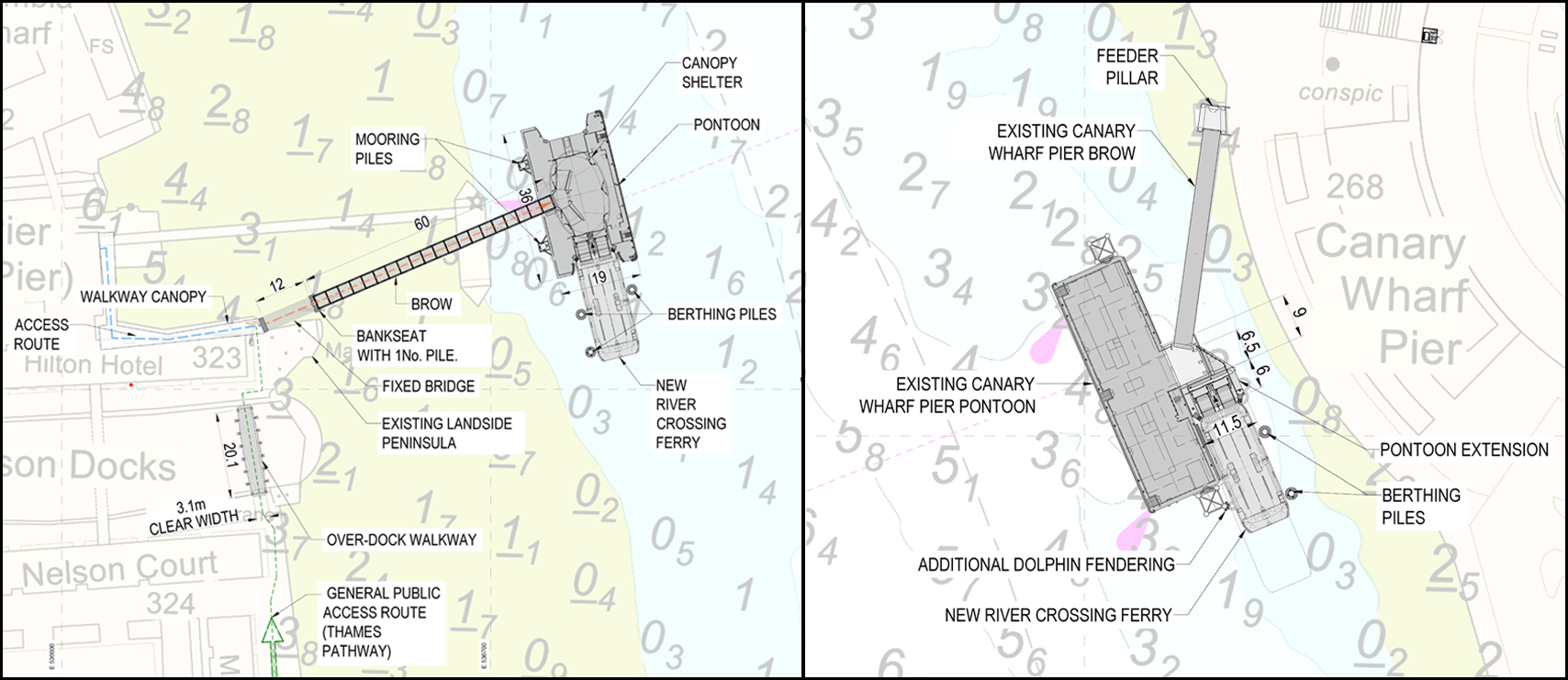
Accessibility was a key consideration in positioning the new Rotherhithe Pier. In particular, extending the canting brow further out into the river than the previous pier to ensure a minimum 1:12 gradient (as per TfL guidance) could be met during all stages of the 7m tidal range. Boarding ramps, forming part of the auto-mooring system, were also designed to remain accessible whilst accommodating varying pitch, roll and yaw of the ferry relative to the pontoon. The final scheme drawings for the river crossing are shown in Figure 3.1 and Figure 3.2.
To deliver the scheme within a 2-year period, strong cross-party collaboration was essential. Key design aims were communicated early within the design process and used to guide regular communications between the maritime engineers (BRL), naval architects (WSY), electric charging engineers (ASP) and operator (TC). For example, the nested berth solution (see Section 4.3) was developed collaboratively between these parties, considering the structural design, requirements for vessel restraint and operational mooring practicalities.
Upon completion of the concept design in November 2023, applications were submitted for planning permissions and marine licences. A summary of statutory approvals required is presented in Table 3.1, demonstrating the organisational complexity of the statutory landscape on the River Thames. Both Rotherhithe and Canary Wharf sites are also under third-party ownership, adding additional complexity in landowner approvals.
As shown in Table 3.1, significant delays were experienced beyond the standard determination periods –notably due to objections from the Environment Agency regarding the condition of river walls adjacent to the site at Rotherhithe, despite these walls falling under separate ownership from the pier. As a consultee to the Port of London Authority, Marine Management Organisation and London Borough of Southwark, this same objection delayed a further three approvals to almost 1 year determination periods. This was a significant obstacle to the scheme, which nearly inhibited the entire scheme due to the strict 2-year programme imposed by CMDC funding requirements.
Table 3.1: Summary of statutory approvals for the scheme
| Authority | Approval Type | Date Received | Determination Period (wks*): Estimated | Determination Period (wks*): Actual |
|---|---|---|---|---|
| London Borough of Southwark (LBS) | Local Authority Planning Permission – Rotherhithe | 13.11.24 | 13 | 52 |
| London Borough of Tower Hamlets (LBTH) | Local Authority Planning Permission – Canary Wharf | 31.01.24 | 13 | 11 |
| Environment Agency (EA) | Flood Risk Activity Permit (FRAP) | 27.09.24 | 8 | 44 |
| Marine Management Organisation (MMO) | Marine Licence | 04.10.24 | 13 | 45 |
| Port of London Authority (PLA) | River Works Licence (RWL), Temporary River Works Licence (TRWL) | 24.07.24 | 12 | 36 |
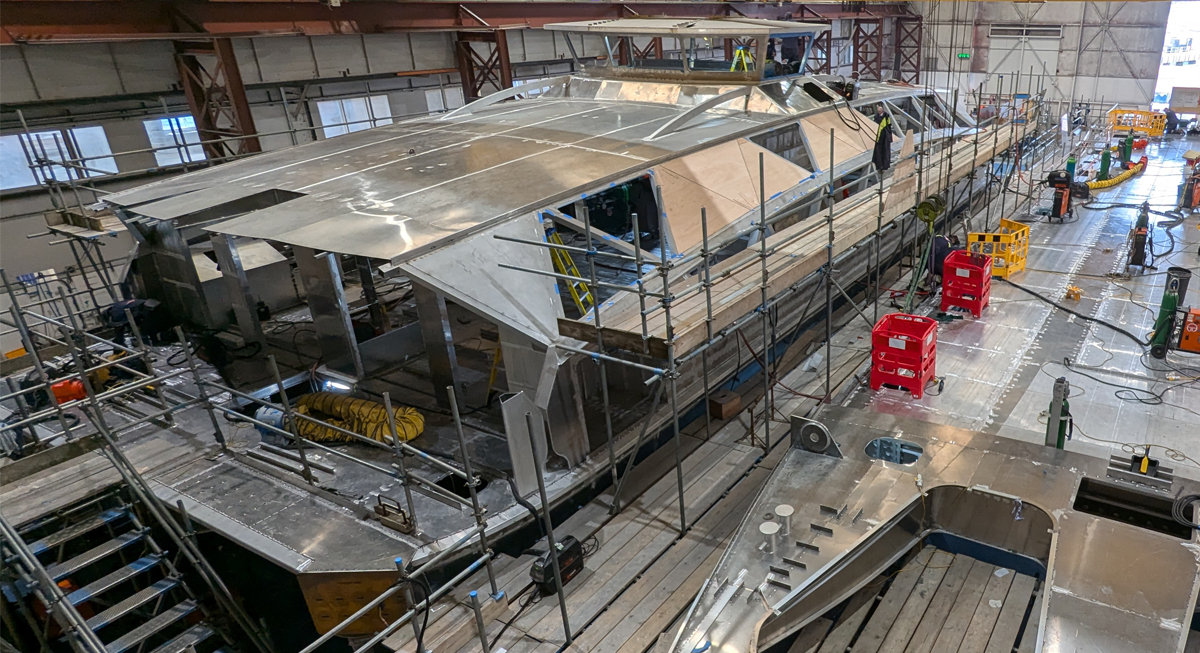
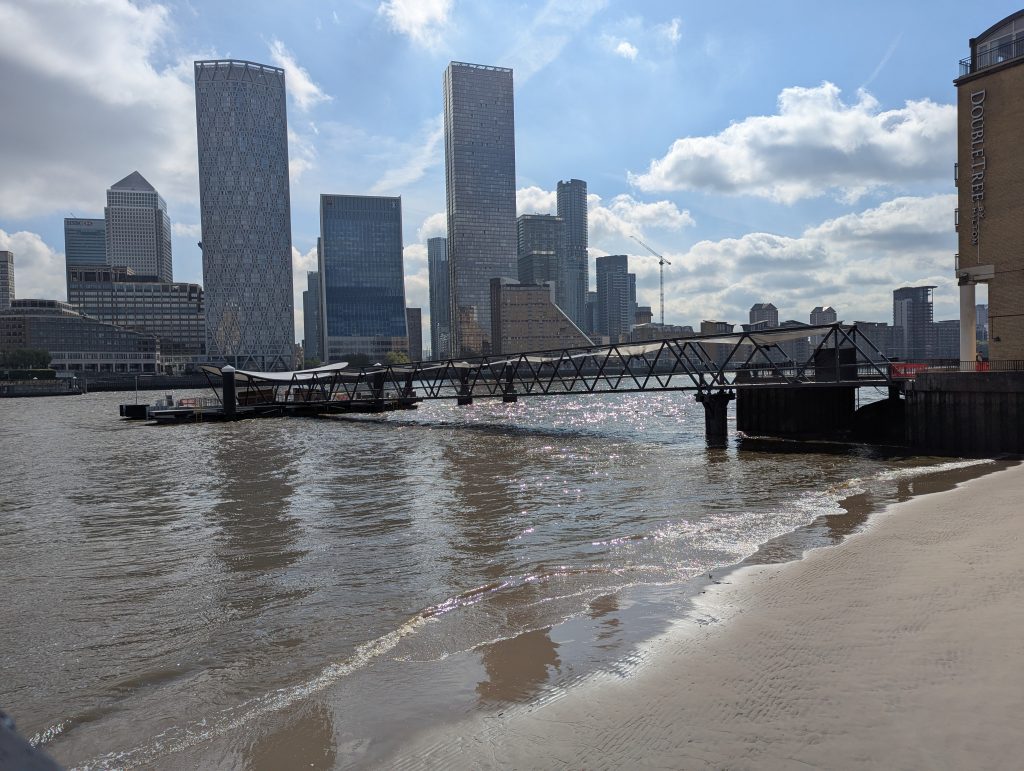
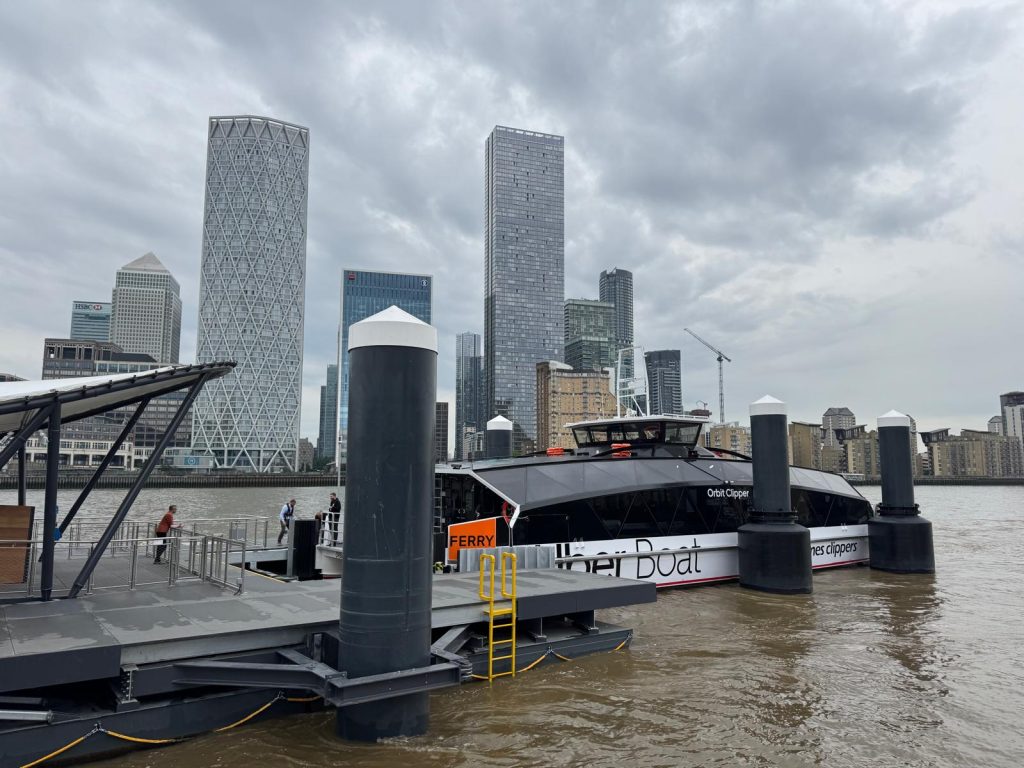
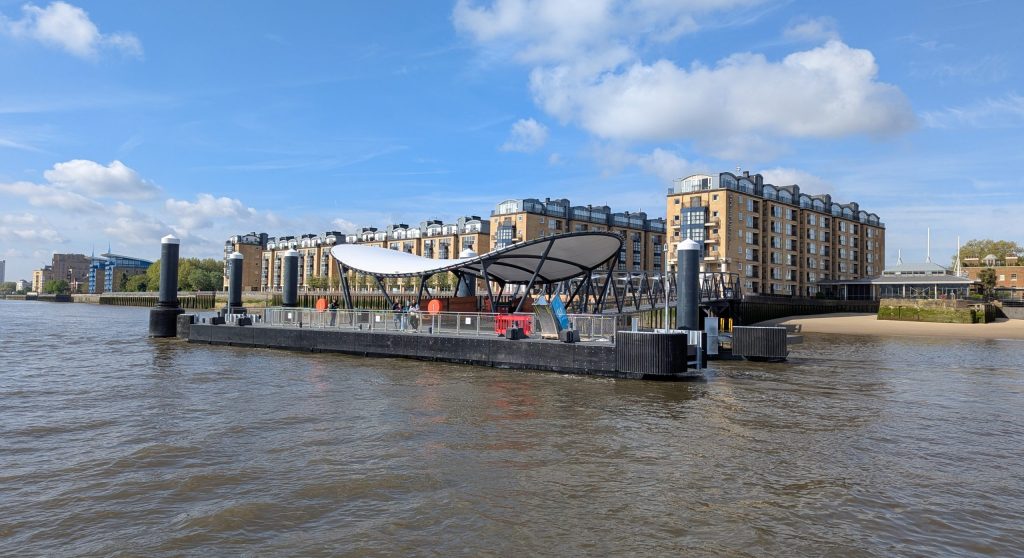
When all approvals were in place, contractors Red7 Marine and Delphini completed fabrication and construction works for the piers between December 2024 – April 2025, coinciding with the delivery of the Orbit Clipper. The completed Rotherhithe Pier and Orbit Clipper are shown in Figure 3.3 and Figure 3.4. The subsequent sections highlight some of the challenges and lessons learnt in delivering this scheme, presented from the maritime engineers’ perspective with a focus on aspects specific to the scheme’s innovative, net-zero nature.
4. Lessons Learnt & Discussion of Future Opportunities
4.1 Gaining Requisite Funding
The CMDC funding, which was only accessible with innovative net-zero objectives, was an enabler for the project by providing the CAPEX funding and a forum for collaboration. These are common factors recognised across CMDC participants (Frontier Economics, 2025), and especially prevalent for a consortium, such as this, of SME’s who often lack the available resources to invest in innovation. Throughout the scheme, the processes involved in bidding, reporting and claiming funds were overall a positive experience in terms of support and communication. We therefore advocate for continued government support and wider industry uptake of CMDC funding to unlock innovative schemes – a further round of £30 million investment has been announced by UK SHORE (DfT, 2025).
However, the 2-year time constraint (i.e. all claimable funds must be invoiced) imposed by the funding requirements was a significant challenge. Again, this finding is recognised as “recurrent” across CMDC participants (Frontier Economics, 2025). WSY were the only partner to deliver their package within the 2-year programme – the launch of the Orbit Clipper was delayed whilst the pier infrastructure was completed. This is perhaps because vessel delivery, as a ‘standalone’ item, is less dependent on external stakeholders and factors in comparison to the piers, as fixed items within a geographical context. This is demonstrated in Table 4.1.
Table 4.1: Major external stakeholders and factors impacting scheme delivery
| On Vessel | On Piers |
|---|---|
| Marine & Coastguard Authority (MCA) approval | 5 separate statutory approvals (see Table 3‑1) |
| Supply chain of materials | Supply chain of materials |
| Input from 1 design consultant | Input from 5 design consultants, 10 subconsultants, 2 main contractors, 5 subcontractors |
| 2 landowner agreement procedures | |
| Site conditions (weather, tide, unknown obstructions etc.) |
The complexity arising from additional stakeholders and factors also added uncertainty to costs. Increasing costs in the pier construction were absorbed by TC with no scope to apply for additional funding. Whilst the CMDC constraints can be considered effective in supporting delivery of the scheme roughly to programme, this ultimately resulted in a compromise on the quality of pier infrastructure delivered.
Until UK SHORE changes its approach to programme constraints, it would be advised that future projects assume realistic programmes and aim to reduce dependence on external stakeholders and factors where possible. For example, delivering a first-of-its-kind electric ferry and auto-mooring system may have been over-ambitious for the same scheme, and focusing on just one of these aspects may have resulted in a less fraught project delivery.
Further, the suitability of funding schemes should be considered. UK SHORE also provide the Zero Emissions Vessels and Infrastructure (ZEVI) competition aimed at supporting schemes of higher technology readiness level within ‘real-world’ settings, whereas CMDC typically supports trial systems (Frontier Economics, 2025). The ZEVI competition may be a better fit for funding projects like this, which aim to deliver a fully operational system.
4.2 Obtaining Planning & Statutory Approvals
The most significant barrier to delivery of the piers within the 2-year CMDC-imposed programme was the objection from the EA and resulting delays in obtaining planning and statutory approvals (see Table 3.1). Despite highlighting the net-zero goals of the scheme and explaining timelines of the CMDC funding, the EA remained intent on imposing repairs to the adjacent river walls as a condition. With TC unable to apply for further funding, approvals were only granted once the separate riparian landowner committed to the works at their own expense.
Whilst this poses a sustainable dilemma, we felt that the EA were unreasonably risking jeopardising a government-funded, innovative, zero-emissions scheme to achieve their flood protection targets, without considering the wider holistic impact. If implemented effectively, the outcome of enforcing critical river wall repairs on the riparian owner could have been achieved via their statutory powers instead of via the planning system. BRL would encourage authorities to adopt a more centralised and holistic approach for schemes that actively promote net zero, and foster improved integration, collaboration and alignment of goals between statutory authorities.
This is a big-picture issue that the government must address amidst ongoing discussions of planning reform. The recent commitment by the Marine & Coastguard Authority (MCA) to establish a UK Maritime Innovation Hub, which aims to establish a ‘policy landscape that encourages innovation’ and promotes projects ‘necessary for decarbonisation’, is welcomed (DfT, 2025). We suggest the policy landscape could be simplified by reducing cross-consultation – the Rotherhithe river wall repairs could have been singularly addressed via the EA’s FRAP without delaying a further three approvals.
Separately, we would advocate for greater engagement and support from UK SHORE. From our experience, our case officer and wider CMDC team had minimal experience or authority to provide support with statutory approval procedures. We feel UK SHORE, in their unique role, could offer resources to foster collaboration across statutory authorities and promote a holistic approach to approvals.
Lastly, the industry should consider how to better engage with authorities and demonstrate the benefits of projects. Despite pre-application consultation and providing 17 supporting studies, the benefits of the zero-emission ferry scheme were clearly not effectively communicated. We suggest that future schemes consider how they clearly and concisely present benefits in terms of innovation and contributions to decarbonisation. For example, a comparison of our scheme to alternative river crossing solutions, such as the existing diesel ferry scheme or the previously proposed bridge scheme, to demonstrate relative benefits (e.g. carbon footprint) may have been beneficial.
4.3. Managing the Ship-to-Shore Interface
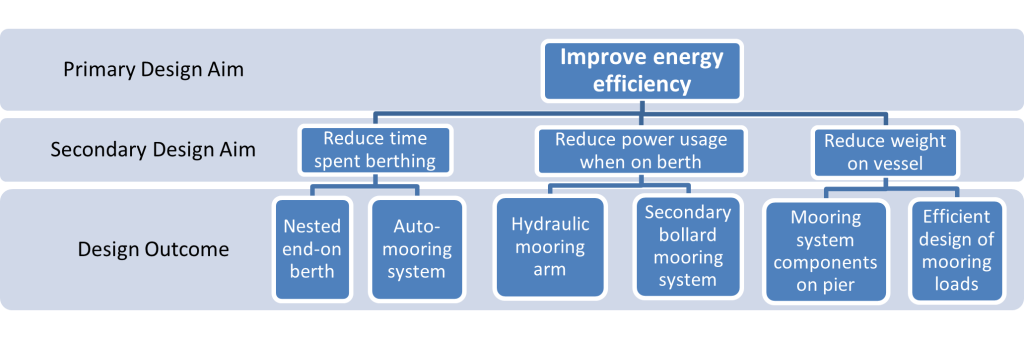
Establishing the key design principles of the zero-emission ferry service (fast, electric, accessible) was critical in managing the ship-to-shore interface. Further to providing electric charging, energy efficiency of the electric ferry was identified as a key priority – more so than traditional diesel-powered vessels, as we aimed to limit onboard battery capacity whilst delivering a full day of ferry service without stopping to charge. Whilst energy efficiency was delivered through the vessel design, such as the choice of a catamaran hull, further efficiency was achieved in the ship-to-shore interface by fostering a collaborative design approach across the maritime engineers, naval architects and electric charging engineers. Figure 4.1 illustrates how this was translated into achievable design outcomes.
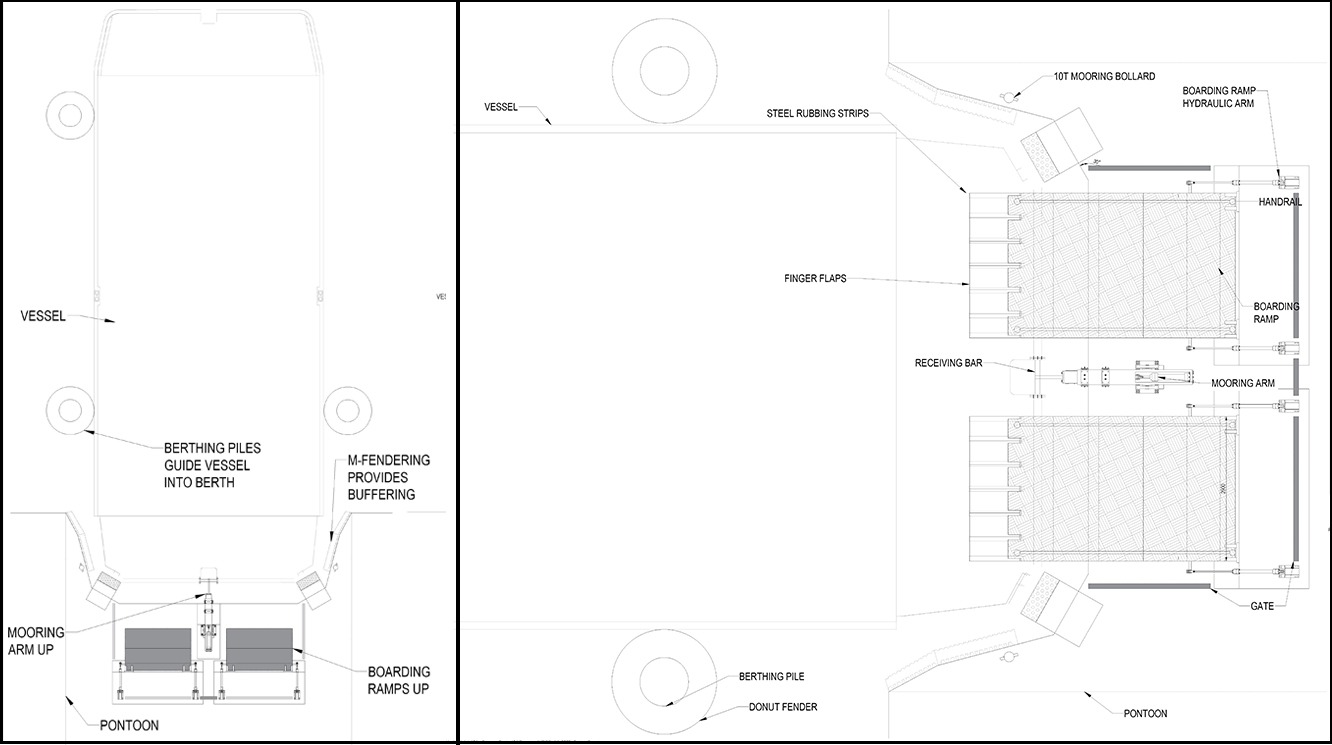
To reduce time spent berthing, a nested end-on berth arrangement was designed, as shown in Figure 4.2. The layout of tubular berthing piles and pontoon ‘nibs’ was designed to guide the vessel into its nested berth with limited delays, manoeuvrability requirements or power draw on the vessel. This is supported by a bespoke fendering system comprising donut, buffer and multipurpose fenders that enable the ferry to ‘drive onto’ its berth. This arrangement also provides restraint for the vessel when on berth, such that power usage can be minimised, with a secondary mooring system provided by bollards on the pontoon and berthing piles for overnight mooring and adverse conditions. The tolerance in the berthing arrangement design was agreed collaboratively, with input from the operator’s captains, seeking to balance ease of entry into the berth and extent of nested restraint.
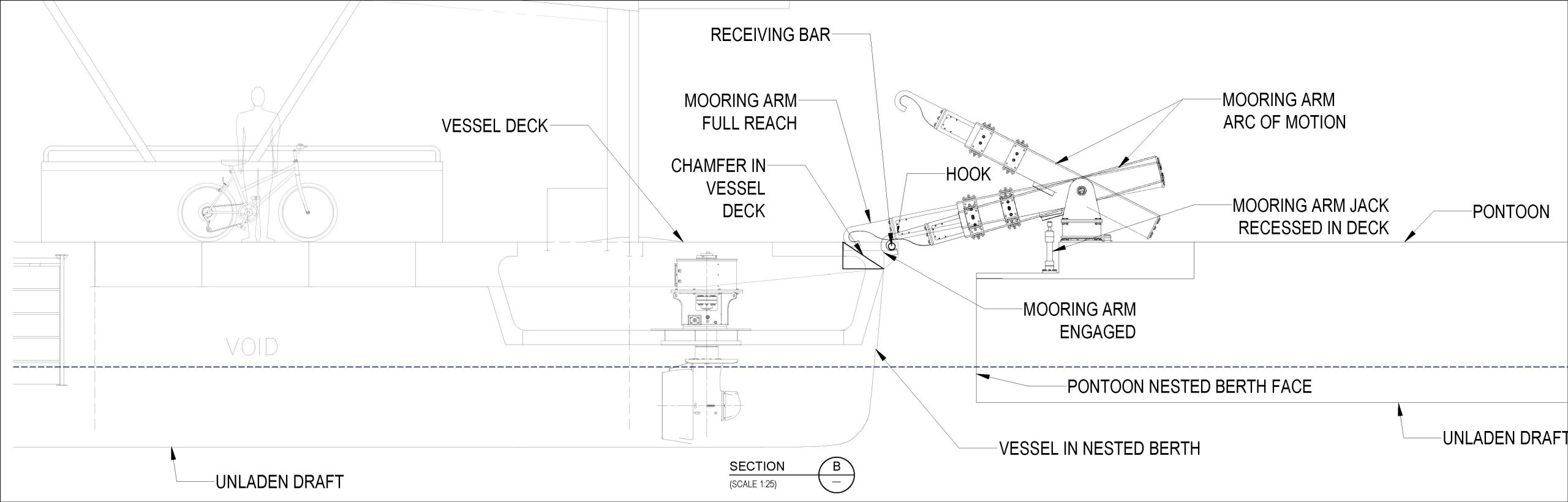
Another key aspect of improving energy efficiency was the automated mooring system, as shown in Figure 4.3. This formed part of the scheme’s innovative nature, chosen to demonstrate potential improvements in speed and reliability of berthing compared to traditional man-operated rope berthing. This remains subject to findings of the ongoing trial period. The auto-mooring system integrates a tensile hydraulic mooring arm to lock the vessel at the berth, allowing it to switch engine power off whilst automated ramps engage for embarking and disembarking. To minimise weight on the vessel, most mooring components are situated on the pontoon, with the exception of a steel receiving bar efficiently designed to avoid excess stiffening material in the vessel structure. This is a departure from existing schemes, notably in Denmark and the Netherlands, where automated mooring systems are typically located on the ferry to accommodate the heightened pitch, roll and yaw relative to the more stable pontoon.
In review, the collaborative approach to the ship-to-shore interface is considered a project success. All parties effectively communicated requirements and proposals that were integrated into the final design. However, a true assessment of this success cannot be completed until the Orbit Clipper has completed its trial period within the berth using the auto-mooring system. BRL were able to effectively manage this interface and design phase due to dual expertise in maritime civil engineering and naval architecture. Nominating a responsible and competent party to lead the design of the ship-to-shore interface is advocated as a key action for all maritime infrastructure, but especially with electric vessels where achieving energy efficiency is critical.
4.4. Delivering Berth-Side Electric Charging
It was chosen from the scheme’s outset that the ferry would use electric charging via a direct cabled link to the national grid because this was considered the easiest method of implementation within an urban location. Design was progressed by ASP, selecting to install a substation on the landside adjacent to Canary Wharf pier, with a cable route passing across the adjacent landside, down the access brow and through the pier extension structure to deliver a plug-in charging point adjacent to the Canary Wharf berth. This layout is demonstrated in Figure 4.4.
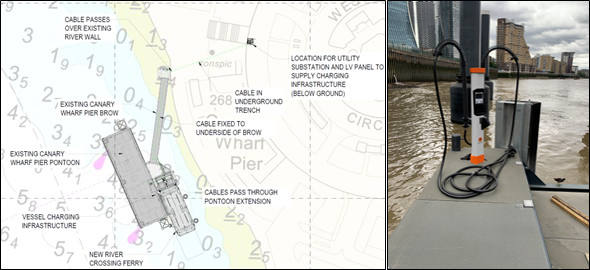
Further to the planning and statutory approval obstacles described in Section 4.2, a significant delay was caused by the time taken to gain approval for the installation of the substation to deliver electric charging. Throughout the 2-year funding programme, multiple substation locations were proposed and assessed against challenges such as national grid capacity, landowner approvals and cabling route. As with the piers, it is felt that the statutory authorities could have adapted their approach to better support this innovative zero-emission scheme.
This challenge was a key lesson learnt from the project. Assessing the existing grid capacity and connection point should have been a greater priority during the feasibility and optioneering stages of the scheme, especially during early-stage consultation with stakeholders and authorities. As with the piers, the electric charging source is a fixed item dependent on location and, therefore, should follow the same approach throughout the scheme development. Not only could this have helped avoid delays, but the pier infrastructure and vessel design could have been developed simultaneously, specific to the requirements of the chosen cabling route.
This is a notable change for electric ferry schemes in comparison to traditional diesel-operated vessels, for which provision of bunkering facilities is well established and understood within the maritime industry. To further support future electric vessel schemes, the industry must foster new skills in electrical services and engage better with national grid authorities.
On a subsequent scheme, undertaken by the same consortium under ZEVI funding, berth-side electric charging was designed using a battery system on the pier. This was chosen to mitigate the planned location in central London, where a suitable substation to quickly charge a freight vessel could not be sited. The battery units were thus used to charge from available network capacity, and then quickly recharge the vessel during cargo handling operations.
Conclusion
Delivery of the Orbit Clipper and pier infrastructure to support London’s first fully electric CO-PAX ferry is a major success and a pioneering scheme within the UK maritime sector. The project demonstrates that an electric ferry scheme can be realistically developed from feasibility to completion within 2 years, and that significant reductions can be achieved in financial cost, carbon footprint and environmental impact when compared to alternative water crossings such as a bridge or tunnel. A final project cost of ~£30 million is approximately 5% the estimated cost of TfL’s proposed bridge scheme. Noting the complexity of the statutory landscape, third-party land ownership and the first-of-its-kind nature of the scheme, it is considered that future electric ferry schemes could be delivered within a faster timeframe at further reduced cost.
There is an opportunity for achieving efficiency through repeatability in the design and delivery of the electric ferry and ship-to-shore interface, including the auto-mooring system, provided the scale (i.e. distance, vessel capacity) remains consistent. However, the pier and charging infrastructure, as fixed items within a geographical context, offer less opportunity for repeatability and local factors should be thoroughly assessed in initial feasibility studies. Prior engagement across the statutory landscape should be undertaken to assess appetite for supporting zero-emissions schemes and identify requirements for approval. Identifying a source of electric charging is also critical during early-stage consultation, considering the anticipated usage of the ferry.
There are many locations across the UK where an electric CO-PAX ferry operating on a short, predictable route could provide an effective crossing for rivers or seas. The Orbit Clipper can demonstrate this potential, and this paper provides support for the maritime sector in implementing such schemes.
However, as discussed, greater support across the maritime sector and statutory landscape is required to accelerate maritime decarbonisation. With technology increasingly ready for implementation, barriers relating to cost, infrastructure, policy & regulation, and organisational & behavioural practices must be addressed (DfT, 2023). We advocate for a more collaborative, innovative and aligned maritime sector that allows zero-emissions schemes to thrive – ensuring suitable funding is available and support is provided by statutory authorities.
Acknowledgements
The authors would like to thank project partners Thames Clippers, Wight Shipyard and Aqua SuperPower, as well as Innovate UK and UK SHORE for their funding support. The authors would also like to thank key project contributors Anthony Carlile Architects, Red7 Marine, Delphini, Aus Yachts, Fairfields, Eadon Consulting & Houlder. We would like to acknowledge the wider Beckett Rankine team who have made significant contributions to the scheme, in particular Nathan Smith.
References
Anwar, S., 2020. Towards Ferry Electrification in the Maritime Sector. Energies, Volume 13.
Artemis Technologies, 2025. Electric Orkney project announces major milestone as hydrofoil vessel arrives in Orkney. [Online]Available at: https://www.artemistechnologies.co.uk/news/electric-orkney-project-announces-major-milestone-as-hydrofoil-vessel-arrives-in-orkney/
Arup, 2023. The case for new zero-emission ferry crossings, : .
Baresic, D., 2024. Identifying Locations for Early Adoption of Zero Emission Fuels for Shipping—The UK as a Case Study. Journal of Marine Science and Engineering, 12(1517).
Beckett Rankine, 2019. Rotherhithe Ferry wins NCE100 Impact in Transport award. [Online]Available at: https://beckettrankine.com/rotherhithe-ferry-wins-nce100-impact-in-transport-award/
Business Norway, 2025. Norway showcases award-winning electric ferry technology. [Online]Available at: https://businessnorway.com/articles/norway-showcases-award-winning-electric-ferry-technology
DfT, 2019. Clean Maritime Plan, : Department for Transport.
DfT, 2019. Maritime 2050, : Department for Transport.
DfT, 2022. UK Domestic Maritime Decarbonisation Consultation: Plotting the Course to Zero, : Department for Transport.
DfT, 2023. Domestic maritime decarbonisation: the course to net zero emissions – summary of responses. [Online]Available at: https://www.gov.uk/government/consultations/domestic-maritime-decarbonisation-the-course-to-net-zero-emissions/public-feedback/domestic-maritime-decarbonisation-the-course-to-net-zero-emissions-summary-of-responses
DfT, 2025. Maritime Decarbonisation Strategy, : Department for Transport.
Frontier Economics, 2025. Evaluation of UK SHORE, s.l.: .
Horgan, R., 2019. Revealed | Firms paid almost £10M on canned Rotherhithe crossing. New Civil Engineer.
Johnson, M., 2022. “Electrifying The Fleet” More Sustainable Propulsion Options for the Small-Scale Fishing Fleet, : University of Hull.
London Assembly Transport Committee, 2019. Transcript of Item 3 – Rotherhithe to Canary Wharf Crossing. [Online]Available at: https://www.london.gov.uk/about-us/londonassembly/meetings/ieListDocuments.aspx?CId=173&MId=6789
McIntyre, F., 2018. Atkins wins Rotherhithe to Canary Wharf crossing design. New Civil Engineer.
Sustrans, 2006. Greenways to Olympics Across London, : .
Author Biographies
Beckett Rankine is the leading UK owned maritime civil engineering consultancy, with bases in London, Bristol & Glasgow. They plan, design, procure and manage the construction, restoration and repair of maritime infrastructure.
Matt Jennings is a maritime civil engineer at Beckett Rankine. John Monasta is an Associate Director at Beckett Rankine and a chartered engineer with RINA. Tim Beckett is a civil engineer and has been a Director of Beckett Rankine for 40 years. He is a Fellow of the Institution of Civil Engineers and a committee member of PIANC UK.
Rotherhithe zero emission cross-river ferry
News and updates