

Article | 5 minute read
When considering maritime heritage in the UK, it’s likely that the first images that spring to mind are imposing, impressive ships embodying the spirit of seafaring days gone by.
Sails hoisted on towering masts, creaking wooden decks underfoot, a figurehead jutting over water.
Or perhaps a warship’s protruding guns silhouetted against the sky in gun-metal grey.
Historic ships have cemented their place as viable public museum attractions, with millions of visitors flocking to step into the past and experience a glimpse into the lives of those who lived and worked on board decades, or even centuries, before.
But what about their docks?
Ships and docks are intrinsically entwined. From shipbuilding to maintenance and, eventually, decommissioning, a ship needs a dock.
Equally, a dock with no ships is at risk of abandonment, falling into disuse and disrepair.
To remain – or return – to a fit state of repair, historic vessels often transition into a tourist attraction to draw in the necessary funds. This frequently involves transformations that sympathetically restore them to their former glories (or close to), offering visitors a better appreciation of the ship’s story and significance.
Docks encourage deeper community connections.
They enable connections to other historical assets, in turn supporting the creation of maritime heritage centres and cultural hubs.
- Portsmouth Historic Dockyard
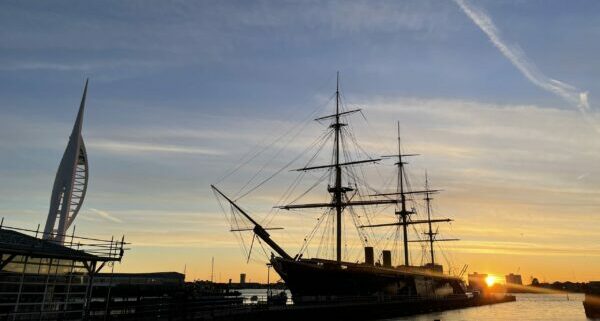
Portsmouth Historic Dockyard attracts 725,000 visitors annually, with an estimated 30 million people visiting HMS Victory since opening to the public in 1922. Victory is undoubtedly the showstopper, but it is thanks, in part, to the dock that the vessel is such a successful attraction.
At 220 years old, Portsmouth No.2 Dock is a Scheduled Ancient Monument and the oldest operational dock in the world, a claim secured by housing HMS Victory.
The ship has undergone continuous maintenance, repair, and restoration since its arrival in Portsmouth over a century ago. Carrying out the works while in Dock No.2 has led to a lower cost of work and more of the ship’s historic fabric has been retained. HMS Victory can stay partially open to the public while work is carried out, with the dock itself incorporated as part of the attraction that allows visitors to see the ship’s hull up close.
The Portsmouth Historic Dockyard is also home to other historically important vessels such as HMS M.33, the Mary Rose and HMS Warrior, forming an extensive museum complex. The size and significance of this collection make this a site of national importance, made possible due to the docks within which they live.
- Cutty Sark and SS Great Britain
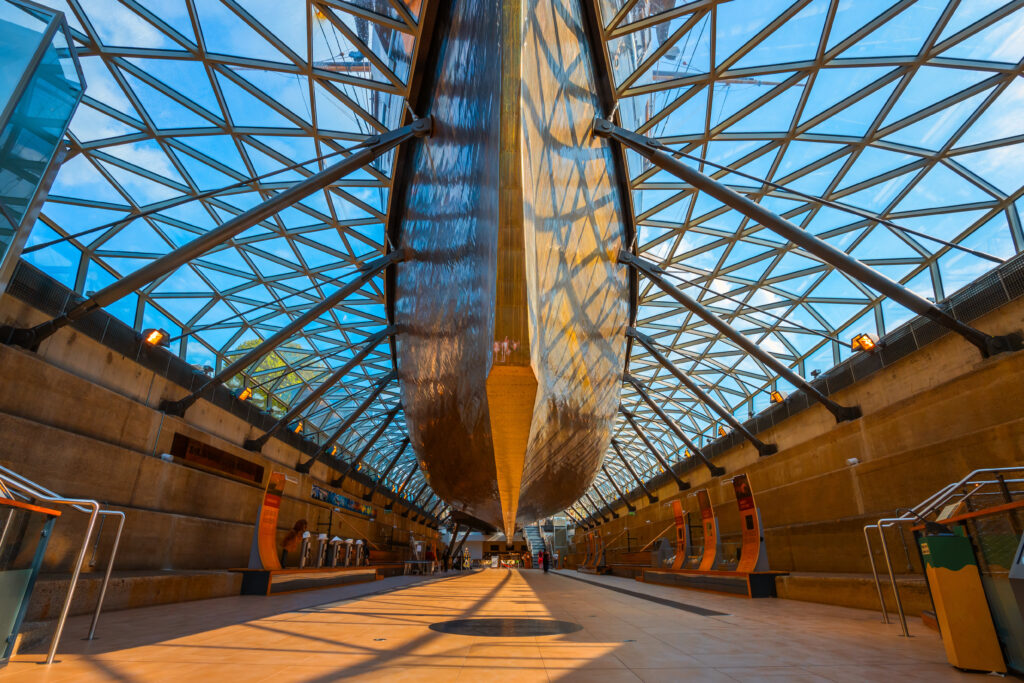
Both the Cutty Sark in London and SS Great Britain in Bristol have incorporated the dock as a core element of the attraction’s interpretation, creating a space within their respective docks that allows visitors a view of their hulls.
The Cutty Sark is docked close to the Old Royal Naval College and the National Maritime Museum, which helps visitors better understand the vessel’s place within Britain’s wider maritime heritage.
The Great Western Dockyard was built in 1839 specifically to bring Brunel’s SS Great Britain to life. After being rescued from abandonment and disrepair, the SS Great Britain returned to the same dockyard in 1970 for restoration, where it remains docked today. The Great Western Dockyard is the perfect location to tell the story of the ship’s origins, working life and restoration, and additionally provides a gateway to the city’s wider story of Victorian engineering innovation.
- Hull Maritime City
Meanwhile, Hull is undergoing a major regeneration project to become Yorkshire’s Maritime City, which includes a refurbished light vessel and maritime museum in addition to Arctic Corsair’s restoration into a museum ship.
Placing the Arctic Corsair within the North End Shipyard reinforces the ship’s links to both Hull’s fishing industry and its shipbuilding history, emphasised by the adjacent historic Scotch Derrick crane.
Docking is not without its challenges.
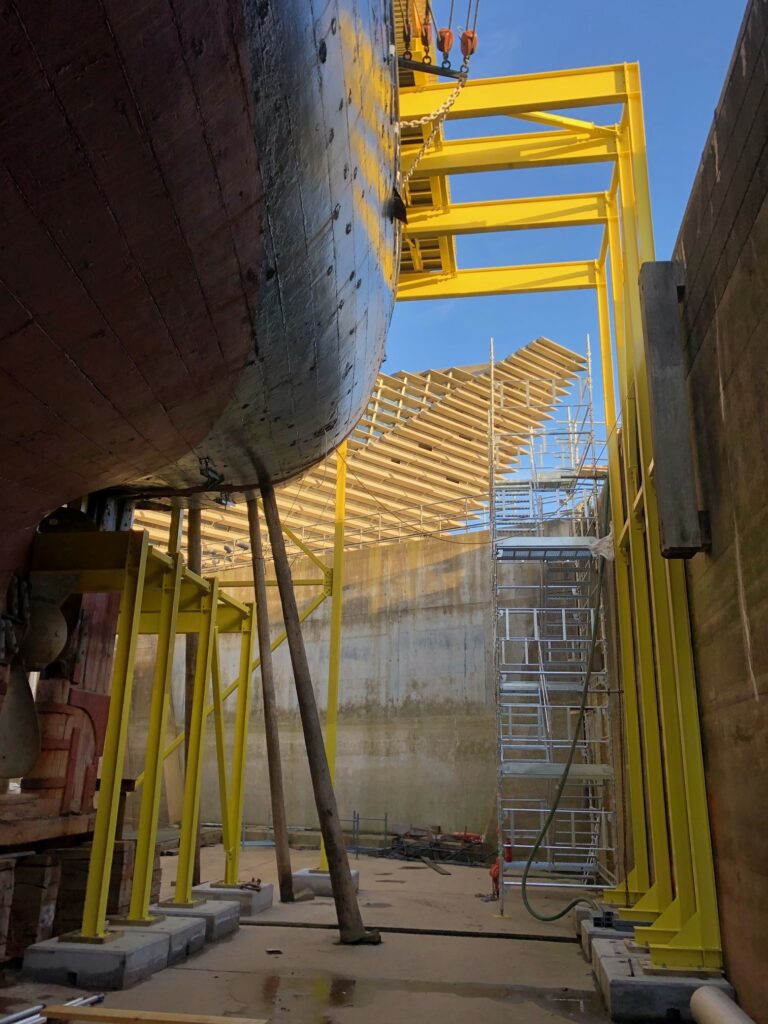
Docking is vital to historic ship conservation and cannot be approached as ‘one-size-fits-all’, literally or figuratively.
For instance, HMS Unicorn in Dundee is trapped within its current dock system and cannot leave to access a working dry dock for repairs. However, once restored, the abandoned East Graving Dock nearby could potentially house Unicorn permanently. The dock will provide a certain and stable home for Unicorn while restoration takes place and the longer-term options for the ship are considered.
For RRS Discovery, it was placed in a fully functional dry dock. However, the nearby V&A Dundee museum was later constructed in such a way that it is physically impossible to move Discovery to a shipyard for works, as the operation would require removing its masts so that it may pass beneath the V&A’s structure. This means that restoration and maintenance can only be delivered on-site by contractors, which can be logistically complex and reduces access to key skills.
These examples demonstrate how overlooking the importance of the dock itself can negatively impact historic ship preservation.
Docks are more than holding places for ships.
They are key to keeping maritime history alive.
Historic ships and their docks form a symbiotic relationship that keeps the other from falling into disuse and disrepair. The combination can create a cultural hub that tells the stories of people and places, preserving the past and cementing their position in local communities.
So while historic ships may be the main character in the UK’s maritime heritage story, docks are the supporting sidekick – without them, the whole narrative falls apart.

Associate Director, John Monasta, will be presenting a technical paper on this topic, titled ‘Historic ships in docks: square pegs in round holes?’ on 4 June 2025 at the Dry Dock Conference, Rhode Island USA.
Maritime Heritage at Beckett Rankine
Our naval architects and engineers have specific, unique experience in the bespoke assessment, conservation and repair of maritime heritage assets, particularly historic vessels, drydocks, dock gates, cranes, harbours, and marinas.
We are proud of our role in preserving historically important ships and infrastructure, including HMS Warrior, HMS Belfast, RRS Discovery, Historic Dockyard Chatham, and Charlestown Historic Harbour.