Beckett Rankine and the University of Greenwich have secured a £137,000 Knowledge Transfer Partnership (KTP) grant from Innovate UK that could revolutionise how historic timber ships are protected and maintained.
The maritime engineers will collaborate with a team of academics to develop an innovative 3D modelling technique for deeper insights into the structural integrity of complex wooden-hulled vessels.
The KTP will build on the Finite Element Analysis (FEA) modelling technique previously developed by the University of Greenwich to conduct structural analysis of the composite-hulled Cutty Sark.
The aim is to create an advanced FEA methodology specifically for large timber vessels, because their hulls present a different set of challenges to their iron- or composite-hulled counterparts. The new technique will analyse the aggregate behaviour of timber elements, accounting for the caulking, fixtures, and curved shape that traditional FEA methods struggle to model accurately.
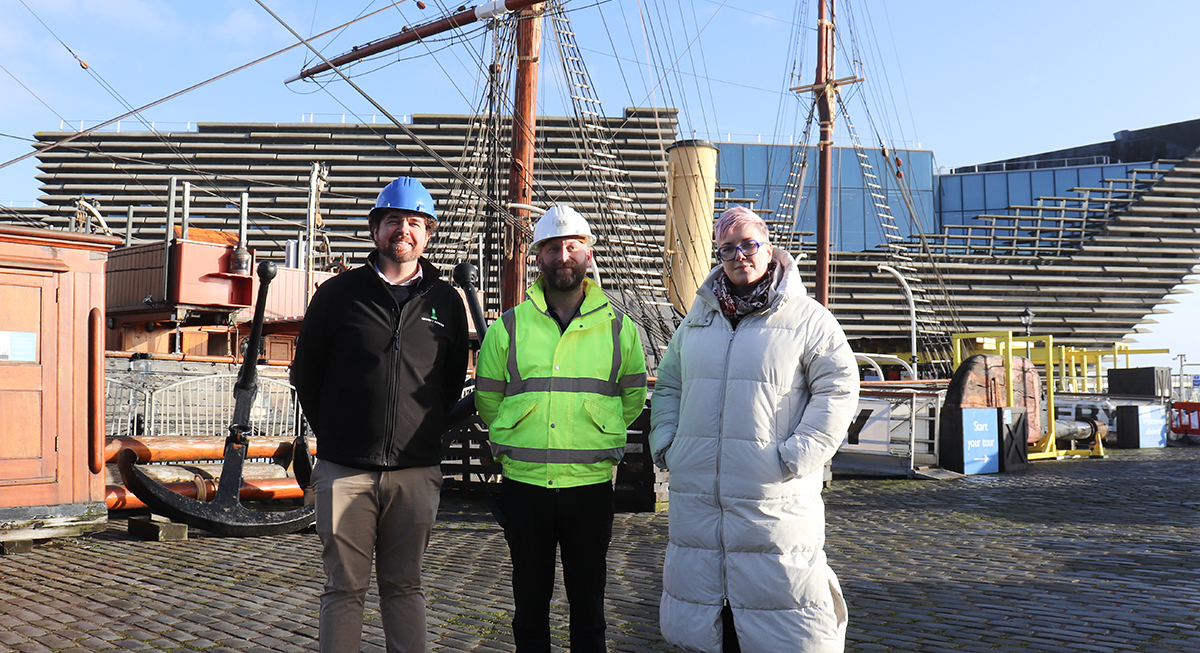
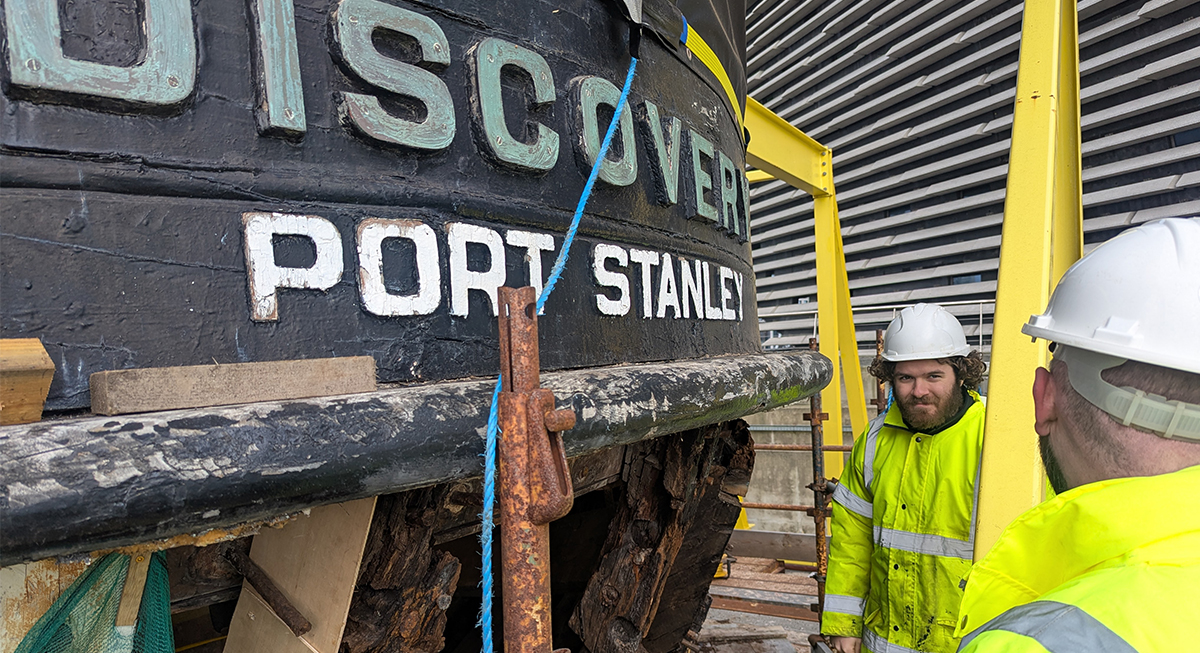
The 18-month research project will use RRS Discovery as its primary case study, a 125-year-old auxiliary barque that was the first ship specifically designed for Antarctic research. Now a museum ship under the care of Dundee Heritage Trust, RRS Discovery is undergoing a significant restoration project managed by Beckett Rankine to secure its long-term future.
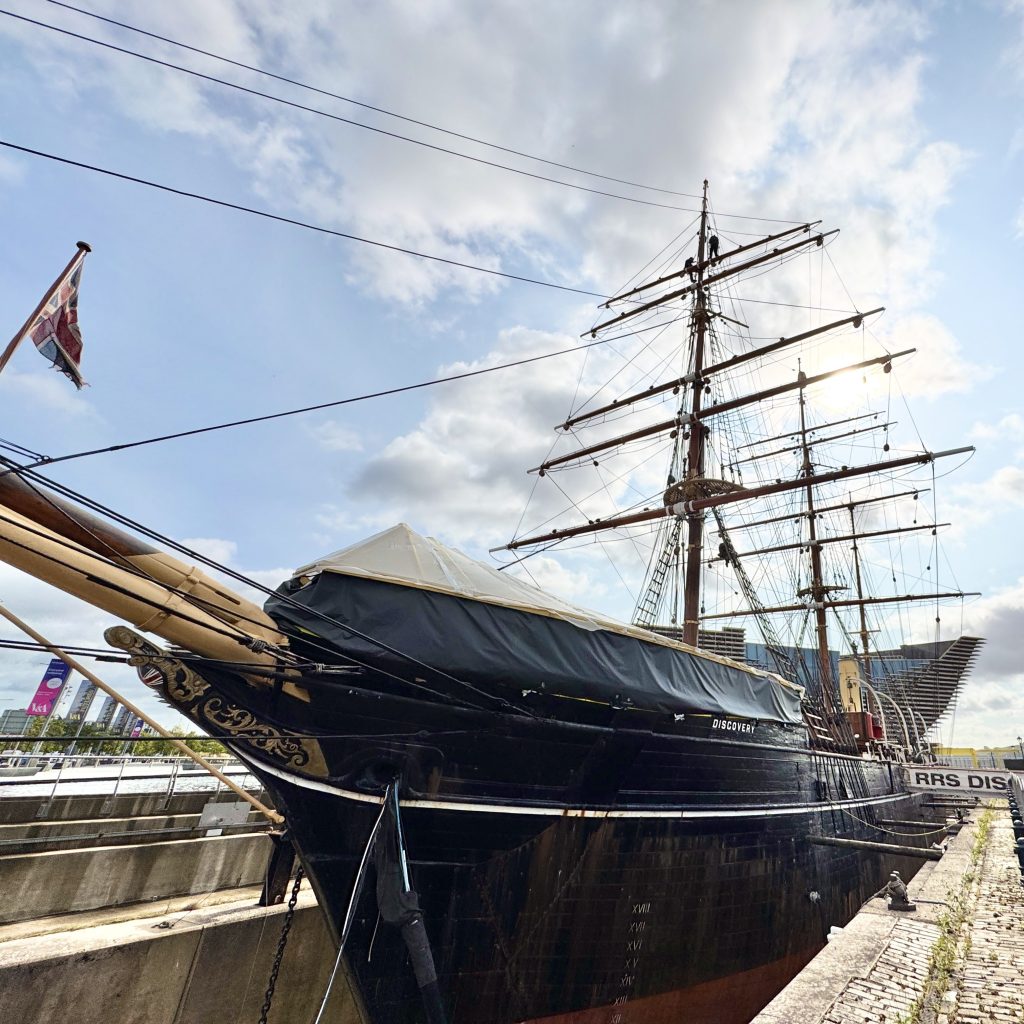
The project team will gain unique access and insights into the vessel while developing the method, which they will later validate on another historic vessel with a different construction style to ensure the method is robust and versatile.
The KTP received statements of support from historic vessel custodians, National Historic Ships UK, and the International Congress of Maritime Museums, each affirming the significant impact this research could have on the maritime heritage industry.
There are over 100 historic timber vessels afloat worldwide, eight of which are major ships permanently docked or museum-held in the UK. As their age leads to deterioration that increasingly threatens their long-term stability, vessel owners need a clear picture of their structural integrity to inform decisions around dry-docking, repairs, and other maintenance activities.
However, custodians find that the available FEA techniques are limited with low accuracy, while cutting-edge options are often inaccessible, financially or otherwise.
The KTP aims to bridge the gap between academia and industry by embedding the University’s innovative approaches into Beckett Rankine’s services. In turn, this will unlock affordable access to advanced FEA for the maritime heritage industry and empower custodians with vital insights to protect their timber vessels.
The project is a marker of the significant investment the firm has made into serving the maritime heritage sector in recent years, which now accounts for almost a third of its portfolio. Additionally, Beckett Rankine has committed to sharing the newfound knowledge with the wider industry, with a long-term vision to investigate how advanced FEA technology may be applied to other maritime heritage structures for even greater societal benefits.
Tim Beckett, Director of Beckett Rankine and industry lead for the project, welcomed the opportunity to partner with the University of Greenwich:
“Beckett Rankine’s historic ships team has experience in the conservation of ships of many types; but we are aware that existing techniques for structural analysis of large timber vessels leave much to be desired. The complexity of these structures means that, unless properly understood, changes to the vessel’s support – such as being permanently drydocked – can inflict irreversible damage.
Professor Stoyanov and his team have pioneered innovative computational methods of analysing these structures, and I am delighted that they have chosen to partner with Beckett Rankine to bring this advanced technology to the historic ships market. We are also grateful to Dundee Heritage Trust for their ongoing trust in us to develop these methods on RRS Discovery.”
Prof Stoyan Stoyanov, the University of Greenwich’s academic lead on the project, expressed his enthusiasm for the collaboration:
“We are thrilled to embark on this journey with Beckett Rankine. This project represents a perfect synergy between advanced computational science and practical maritime engineering. By applying our expertise in Finite Element Analysis to a commercial environment, we aren’t just solving a technical challenge – we are providing the tools to safeguard our nation’s maritime heritage. Our goal is to transform complex structural theory into a sustainable, industry-ready reality for ship conservators.”
Ali Gellatly, Director of Ship and Facilities at Dundee Heritage Trust, added:
“We are incredibly honoured to be the case study for this project. The Royal Research Ship Discovery is entering Phase Two of the works to preserve and protect the ship for many generations to come, and this work carried out by Beckett Rankine and the University of Greenwich will help shape the cradle support for the ship and ensure that is protected in the dock.”