
Port Masterplanning
When starting to develop a completely new port it is essential to consider how the progressive expansion can be planned to ensure that the selected site is a successful port in the longer term. Further development of trade often results in ports being modified to accommodate different vessels and commodities. Ultimately trade can move away to deeper water sites and the old layouts can be redefined for other uses, such as commercial or residential.
Optimising the positioning of marine structures requires detailed consideration of the hydrodynamic conditions at that location. Even small changes can have a significant effect on the local wave climate or siltation pattern. The shore-side layout has to be planned to enable delivery and evacuation of cargo (and passengers) commensurate with the capacity to service vessels at the berths.
Search Berths, Quays & Jetties
Ships of all types need a secure structure to berth against. In deciding on the form of a berth, factors such as wave reflection and soil conditions have to be considered as well as just the cost to construct. Berths offering a similar function may be in various forms at different ports around the world, because they have been built to suit the particular conditions and to make use of the materials that are readily available.
Steel and concrete are commonly used, either for open piled jetty or dolphin structures as well as solid quay walls. High quality workmanship is essential to avoid early deterioration. Fenders protect the structures and have to be designed to suit the vessels, often using a combination of rubber, steel and timber.
Piers
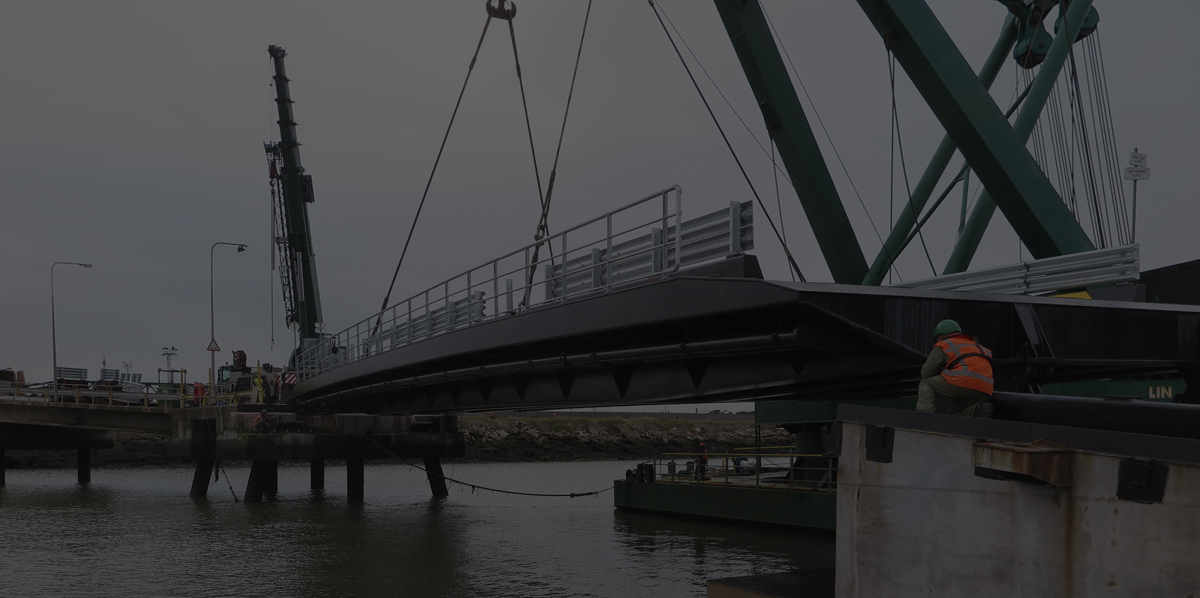
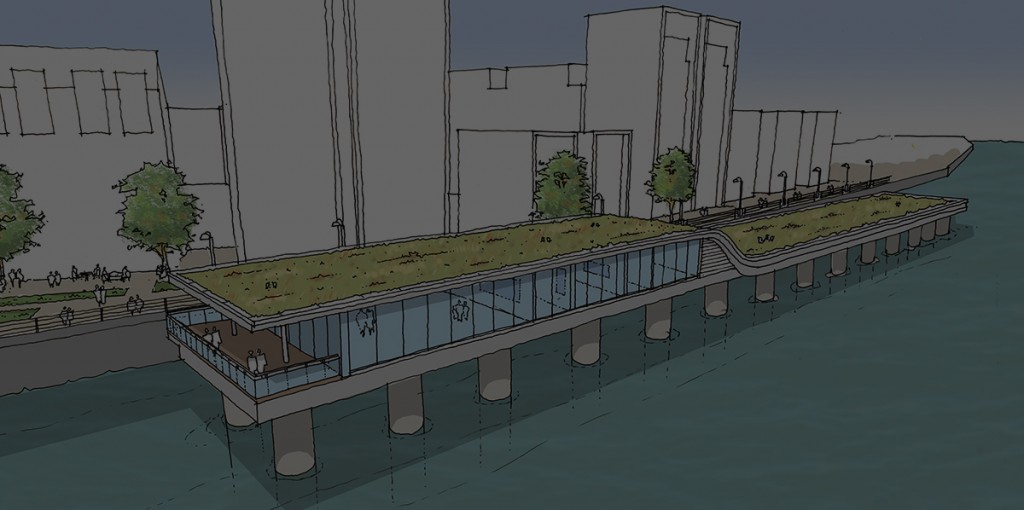
Piers are used to transfer passengers to and from boats and safety is of paramount importance. Floating pontoons and long brows are often used to accommodate water level variation. Attractive, desirable and convenient piers generally cost more but innovative design can help. For example use of radial arms can avoid the need for piles.
Beckett Rankine have designed more piers on the River Thames than any other designer. Historic piers add to the maritime heritage but these may have been constructed from a variety of materials and need considerable care when upgrading to modern standards.
Breakwaters
t is often necessary to berth ships at places that are not naturally protected. A safe haven has to be created to provide calm waters, even in stormy seas.Breakwaters are the very essence of harbour engineering. Design and construction can create a considerable challenge with substantial structures needed to keep out the waves.
Traditionally masonry structures have been built in a solid form on a prepared base, sometimes of considerable dimensions. In most cases this approach is now found to be too costly and new breakwaters tend to be made as “rubble mound” structures, using large rock or concrete units.Floating breakwaters can help to calm small waves at small craft harbours but are ineffective for large-scale work, particularly for longer period waves.
Waterfront Walls & Structures
Many waterfront walls have been constructed, not only in harbours, but also along riverbanks and coastal foreshores. These are usually long-term structures, built to last, as part of a wider flood defence strategy. Special consideration must be given to structures in the marine environment. The structure will have underwater elements having to withstand an often-hostile environment. However conditions may be even more severe above the water line, particularly in tidal zones, with corrosion to steel and deterioration to concrete and other elements.
Structural deterioration or undermining may necessitate some form of refurbishment. Modern specialist materials and techniques can be used to repair many problems. Change in use, perhaps from port activity to residential or commercial, is often the time for refurbishment with the expectation of significant extension to usable life.
Dredging
Shipping lines are progressively increasing vessel sizes in order to improve efficiency. This calls for greater water depth in ports. The trade will go elsewhere if facilities are not provided to welcome bigger vessels. Types of material are critical to the cost of dredging because different techniques and equipment will be needed. The cost of removing rock is substantially greater than the dredging of sand.
Properly supervised hydrographic surveying is crucial to ensure that the correct water depth is provided and that the contractor is paid correctly for his work. Environmental issues have to be considered in advance of dredging and proper planning must be put in place to ensure that adequate mitigation measures are followed. Re-use of dredge spoil for land reclamation is often considered to be beneficial.
Pontoons
Pontoons are increasingly used for berthing yachts and other small craft as the users welcome easy access to the shore. Secure moorings are needed with adequate allowance for differential movement in waves or tidal flow. Heavy-duty pontoons in steel or concrete are used for ro-ro interface and sometimes can be mobilised at short notice.
Weight control during design and construction is critical to achieving specified freeboards and draughts. Beckett Rankine have advised on the development of a new system to fabricate a pontoon as a clad space frame structure rather than as a ship derivative. While the material quantity is slightly greater the overall cost is lower because the amount of welding required is greatly
